

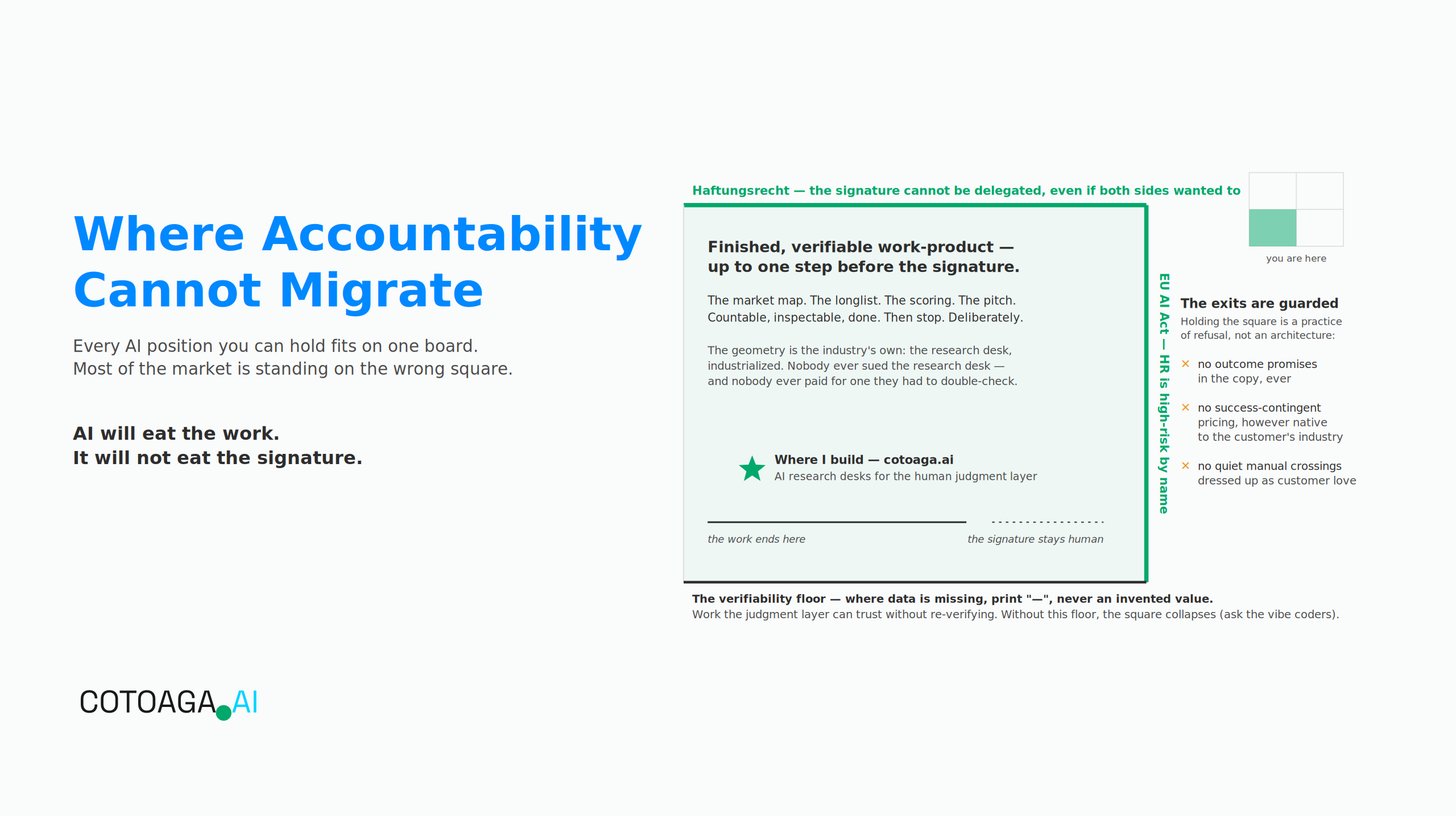
Where Accountability Cannot Migrate
Every AI position you can hold fits on one board. Most of the market is standing on the wrong square — or not on the board at all.
Every number comes in brackets, not points.
Five essays. One paper. One instrument.
Drawn in ten days of September 2026. They cite each other.
Every AI position you can hold fits on one board. Most of the market is standing on the wrong square — or not on the board at all.
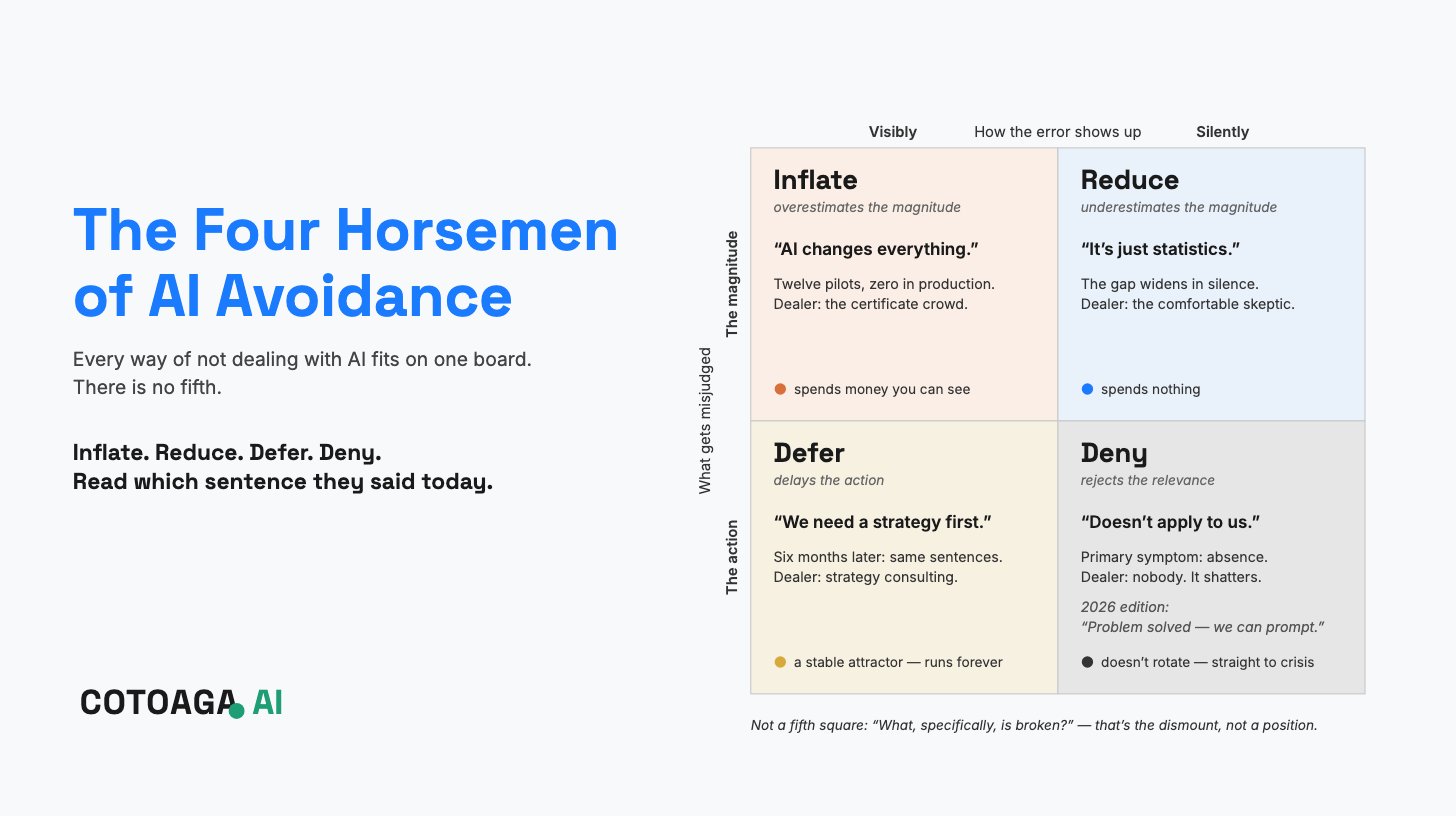
Every way of not dealing with AI fits on one board. There is no fifth.
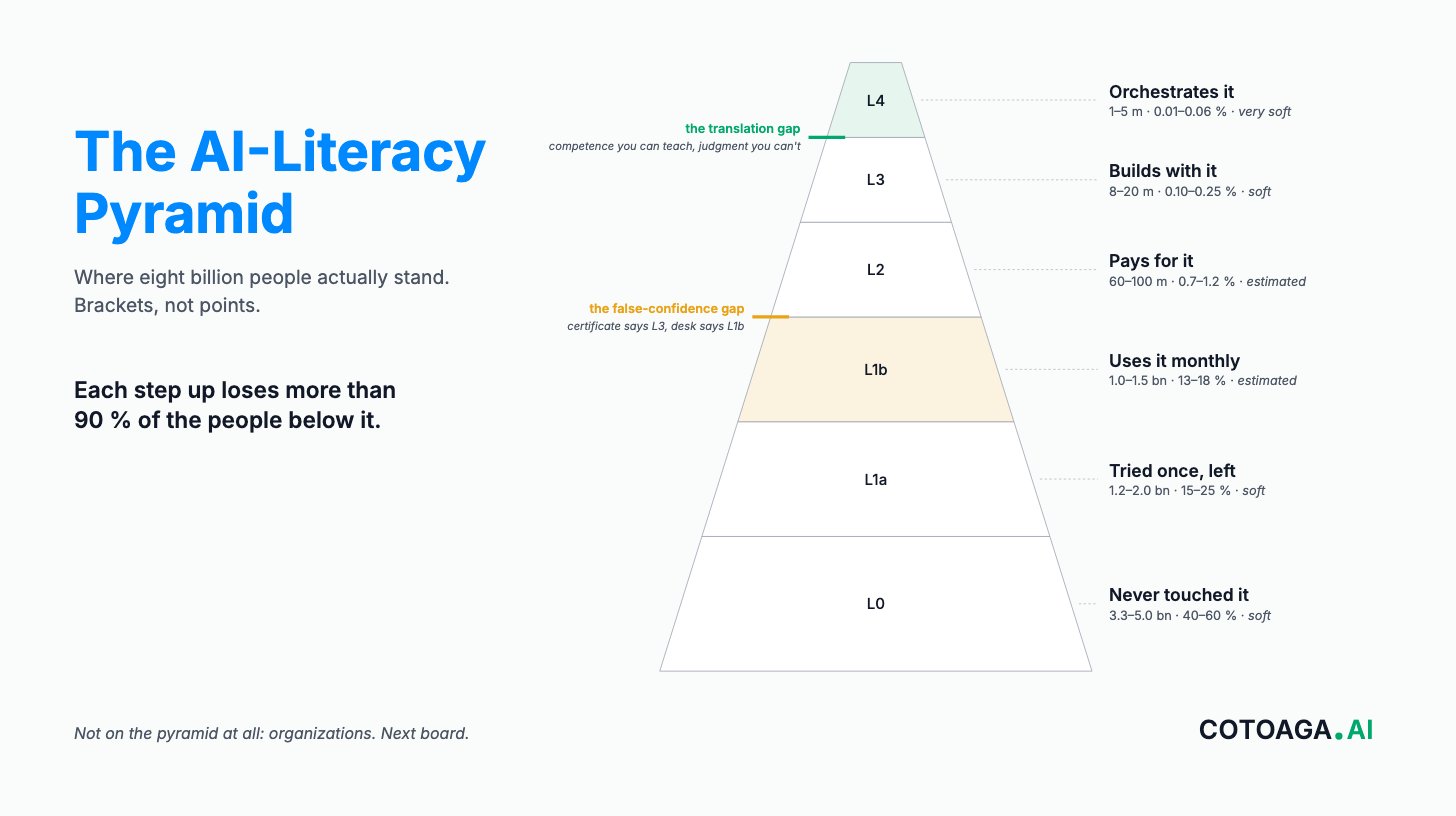
Where eight billion people actually stand — and why 2026 became the year everyone is an expert.
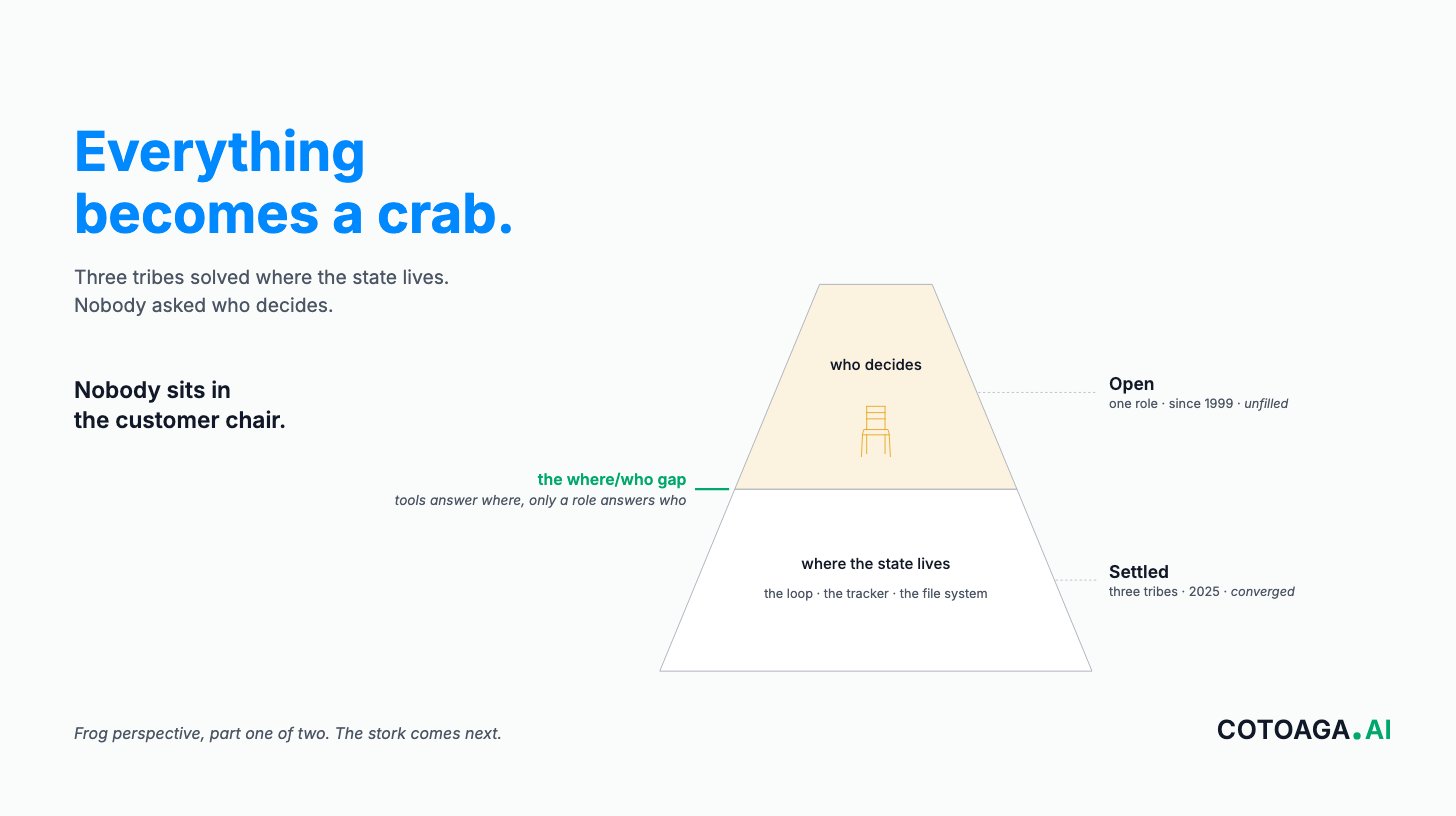
If you are seriously building with AI, you had this moment. Token spend goes through the roof. Not because you shipped more. Just so.
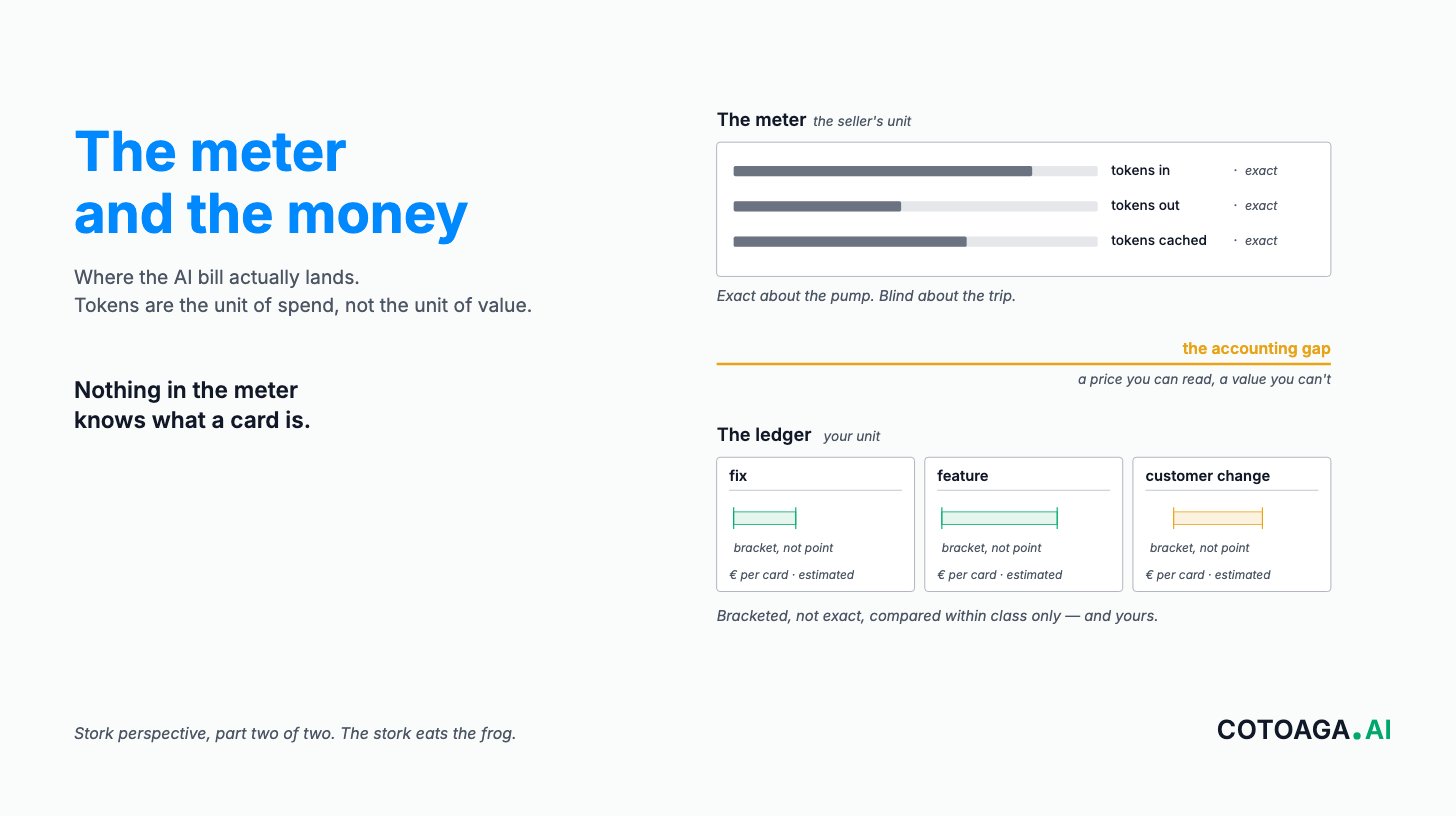
If you are seriously running a company that builds with AI, you had this moment. The bill arrives. It’s up again. And someone — your co-founder, your investor, the voice in your own head that does the books at night — asks what you got for it.
Cognitive Devolution — how a century of training humans to think like machines arrived at its logical conclusion. 125 pages, 73 citations. Read the summary page first; the download is at the end of this page.
What the paper argues for has its own page: Cognitive Sovereignty.
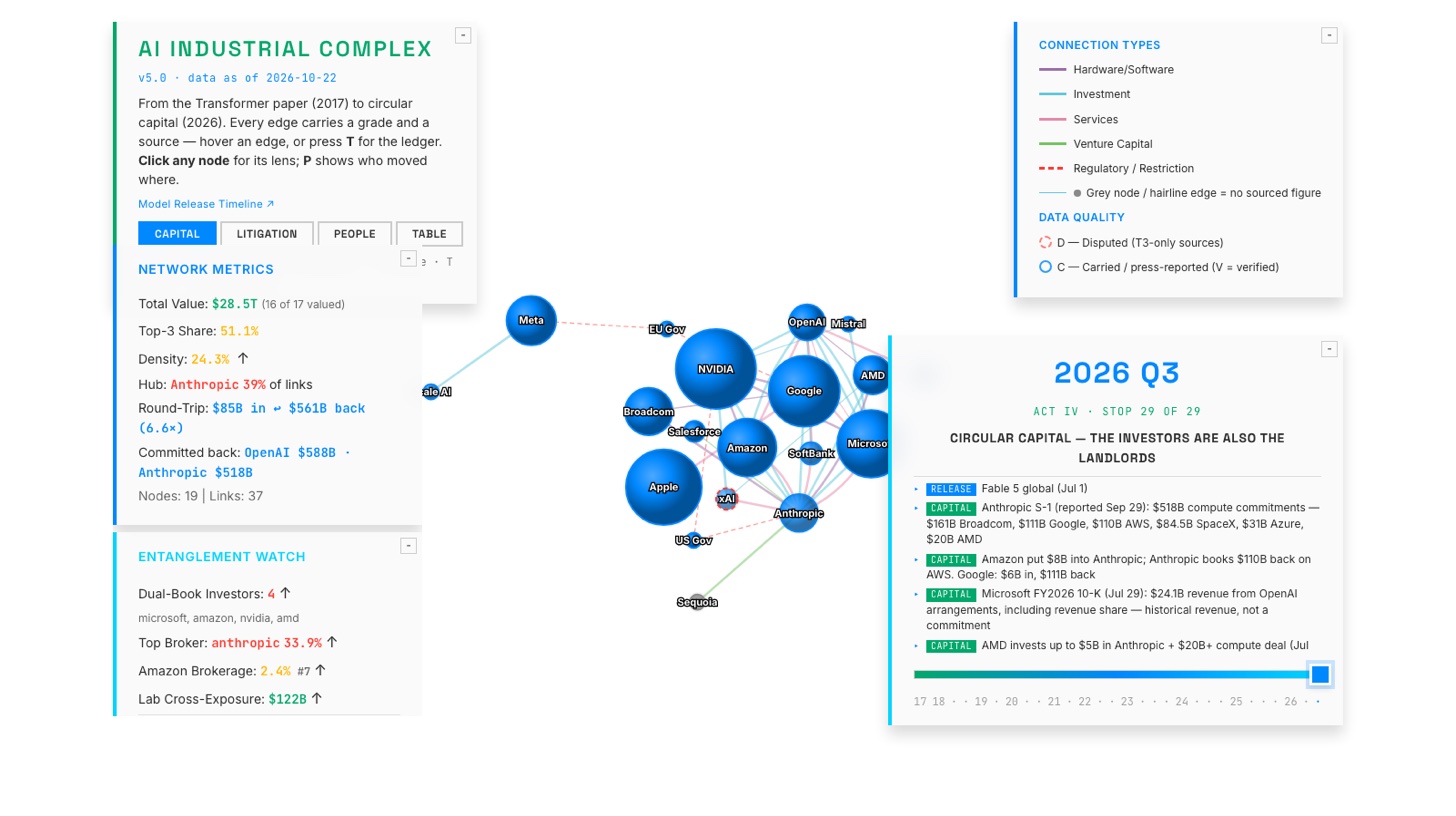
The AI industry as a graph: who funded whom, who published what, where the people went — from the 2017 Transformer paper to today, in four acts. Every edge carries its evidence grade: verified, carried, disputed. An unsourced figure stays a hairline. No estimate is drawn thicker than its foundation.
In 1997 I built decision-support systems for retail investors. Real methods, clean interfaces, thoughtful risk questionnaires — and every one of them tuned so that it always pointed the investor at what the industry was selling.
The paper. Cognitive Devolution — 125 pages, 73 citations. Your email unlocks the download. I keep it to know who reads; nothing else happens to it.
The changelog. When something here changes materially — a new essay, a new version of the paper, a gem rebuilt — one mail. A few times a year. Release notes, not a newsletter.
The channels. The essays appear on LinkedIn first. The exhaust lands on X.
Created Updated