
AI Transparency
Editorial principle: wearing the watermark openly
Claude is in the pipeline. Full stop.
That's the one confession on this page, and it stays dry. Editorial responsibility for every text on cotoaga.ai sits with Kurt Cotoaga: reviewed, revised, owned. The judgment isn't delegated — the workbench is.
What the stamp says
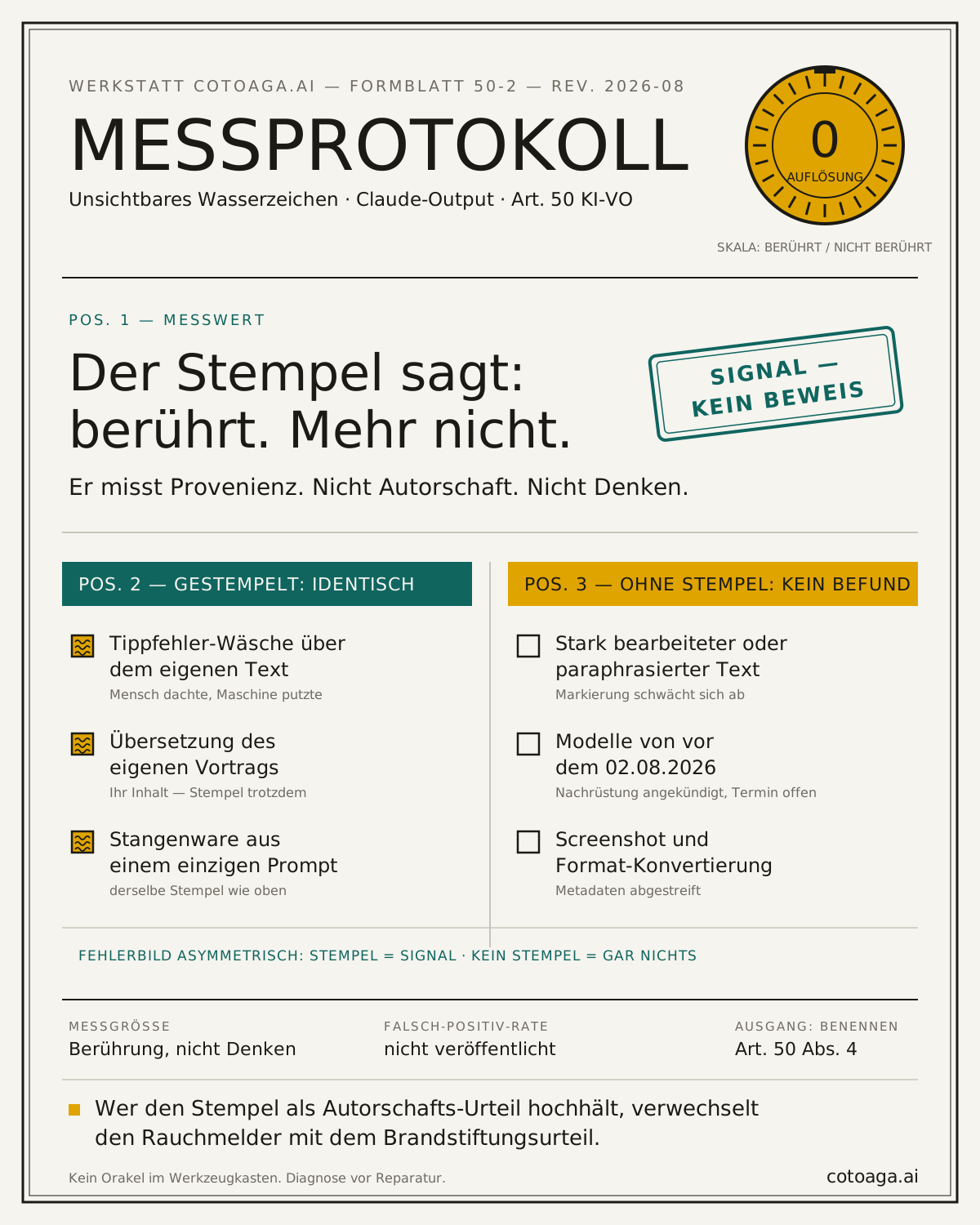
Since August 2, 2026, Claude models watermark text invisibly and files visibly via C2PA — Anthropic's own commitment under the Code of Practice on Transparency (Art. 50(7) EU AI Act). The signal reads: touched by Claude. Resolution: zero.
The stamp doesn't distinguish between typo-cleanup on your own writing, a translation of your own talk, and boilerplate from a single prompt. All three carry the same stamp.
No watermark doesn't mean "human" — it means: not detected, heavily edited, or a model from before August 2, 2026. The error structure is asymmetric: stamp = signal. No stamp = no finding. Anthropic says so itself.
Who's liable — provider, deployer, editor
Art. 50(2) EU AI Act hits the provider: Anthropic, not cotoaga.ai. The machine-readable marking is their obligation.
Art. 50(4) subpara. 2 hits the deployer — cotoaga.ai — for texts of public interest. With one exception: human review and editorial control by a natural or legal person lift the disclosure duty.
Stated editorial responsibility isn't a confession. It's the legal exit. The inspection sticker checks the vehicle, not the driving — it says "inspected," not "driven well."
Two exits
Whoever goes looking for this stamp is usually looking for something bigger: whether anyone here judges at all.
Cognitive Sovereignty — the judgment capacity regulation presupposes and nobody builds.
Karten auf den Tisch — every prompt a micro-decision: what you delegate, what stays yours.
Diagnostic depth on Art. 50: KI-Kennzeichnungspflicht — the workshop guide (German).
Created